
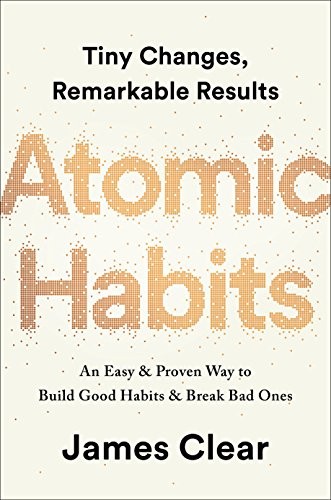
Atomic Habits by James Clear is a bestselling self-improvement book about how tiny daily actions become bigger life changes over time. James Clear is an American writer and speaker known for practical work on habits, decision-making, and continuous improvement. The book explains why lasting change usually comes from better systems, identity-based habits, and small repeated actions instead of one dramatic reset.
Main takeaways from Atomic Habits
For daily life
- Tiny habits compound: Clear explains that a one percent improvement looks almost invisible today, but repeated actions can grow into a very different result. I like this because it lowers the pressure. A small action done often matters more than a dramatic action done once.
- Systems matter more than goals: Goals name the result I want, but systems decide what I repeat. This made me ask a better question: what daily process would make the result more natural?
- Identity comes first: The book says each habit is a vote for the person I am becoming. Instead of only saying I want to write, draw, read, study, or exercise, I can build proof through very small actions.
- The plateau of latent potential is real: Progress can stay hidden for a long time before it becomes visible. That part helped me respect small practice days, especially for illustration, music, language learning, reading, and fitness.
For building better habits
- The habit loop has four parts: A cue starts the habit, craving gives it energy, response is the action, and reward teaches the brain to repeat it. This helped me see habits as a pattern I can study, not a random personality flaw.
- The Four Laws make the habit easier to design: For a habit I want to build, Clear says to make it obvious, attractive, easy, and satisfying. For a habit I want to break, reverse the laws: make it invisible, unattractive, difficult, and unsatisfying.
- Habit stacking gives a new habit a doorway: The book suggests attaching a new habit to something I already do: after coffee, write one sentence; after brushing teeth, prepare clothes; after lunch, read one page. The existing routine becomes the cue.
- Environment design beats willpower: Clear gives simple examples like making fruit easy to see or keeping the phone away during focus time. I love this idea because the room around me can make the next action easier before motivation has to fight.
For starting when motivation is low
- Make it easy: The best habit is often the habit that is easy enough to begin. If the action feels too big, my brain resists. If the action feels tiny, I start.
- The two-minute rule is powerful: A new habit should begin with a version that takes two minutes or less. Read before bed becomes read one page. Exercise becomes put on workout clothes. The first skill is showing up.
- Friction decides many habits: If I want a habit to happen, I reduce the steps. If I want a habit to fade, I add friction. A book on the table is easier to open. A phone in another room is harder to check.
- Temptation bundling makes the start more attractive: The book describes pairing something I want to do with something I need to do, like listening to a favorite audio show only while walking or cleaning.
For staying consistent
- Tracking gives proof: A checkmark, paper clip, or simple tracker gives visible proof that I showed up. The point is not a perfect record. The point is seeing effort before I forget it happened.
- Never miss twice: Missing once is human. The next action matters because the second miss can quietly become the new pattern. I like this rule because it gives me a restart plan instead of shame.
- Immediate rewards matter: Long-term results are slow, so a habit needs a small satisfying finish now. A checkmark, clean desk corner, prepared bag, or finished page can make the action feel complete.
- Social environment shapes behavior: Clear explains that we copy habits from people around us, especially groups where the behavior feels normal. This made me think about conversations, rooms, and communities that make better habits easier to repeat.
For long-term growth
- The Goldilocks rule explains motivation: Tasks stay interesting when they are not too easy and not too hard. They need the right amount of challenge. That helped me understand why some routines feel boring and others feel too heavy.
- Boredom is part of mastery: Clear is honest that successful people keep going after the exciting beginning fades. This matters for piano, guitar, drawing practice, business work, study, and exercise because the ordinary days are where the habit becomes real.
- Review keeps the system alive: A habit that worked last season may need a new shape now. Reviewing the cue, size, reward, and environment keeps the system honest instead of frozen.
Examples from the book that stayed with me
- British Cycling shows the power of small improvements. The story is useful because it turns success into many tiny upgrades instead of one magic trick.
- Habit stacking uses an existing routine as the cue: after I do the current habit, I do the new habit.
- The two-minute rule changes a big habit into a start ritual, like reading one page or putting on workout clothes.
- Environment design makes the better action easier to notice, like leaving a book visible or moving the phone away before focus work.
- Simple tracking, including the paper clip story, shows how visible progress can make repetition more satisfying.
How this book impacted my life
Atomic Habits made me less dramatic about change. As a mother, freelancer, part-time worker, daughter, and illustration student, my life rarely gives me a perfect reset day. This book helped me look for the smallest repeatable action instead: one page, one sentence, one drawing study, one short walk, one bill check, one cleaned corner, one song practice, one honest restart. That feels more real to me than chasing a perfect version of myself.
Who should read it?
- Readers who start many routines and struggle to continue.
- Readers who feel overwhelmed by big goals.
- Readers who want practical steps instead of only motivation.
- Readers building focus, health, study, writing, creative, work, or home habits.
- Readers who like clear frameworks, memorable examples, and ideas that are easy to revisit.
Final words
Atomic Habits is popular for a reason. It is practical, memorable, and easy to return to when life feels too full for a giant plan. My favorite part is that the book makes change feel buildable: small actions, repeated with care, can quietly become a new life direction. I hope more readers treat it as a practice book, not a perfection book.