

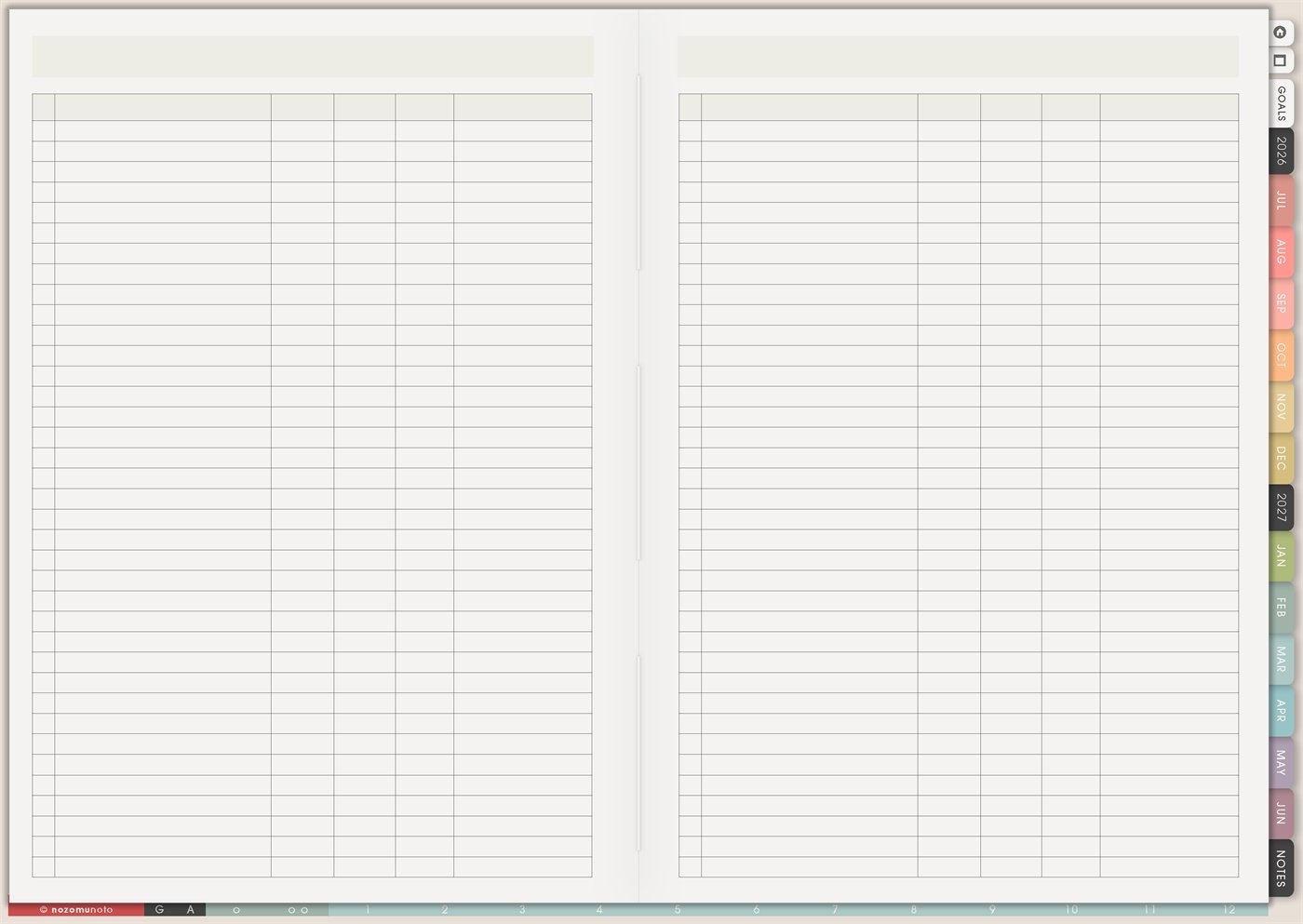
The Yume Techo Multi Purpose Table is a reusable two-page table with wide rows and several blank columns. Use it when a normal list is too flat and everyone needs to compare details side by side: books, movies, games, shopping options, product ideas, supplies, subscriptions, class topics, project resources, inventory, or simple logs.
This page is different from 100 Things. 100 Things is for one long numbered collection. Multi Purpose Table is for items that need columns. If you keep asking, “What is the status, price, place, rating, due date, category, or next step for each item?” this is the page.
How to get to this page
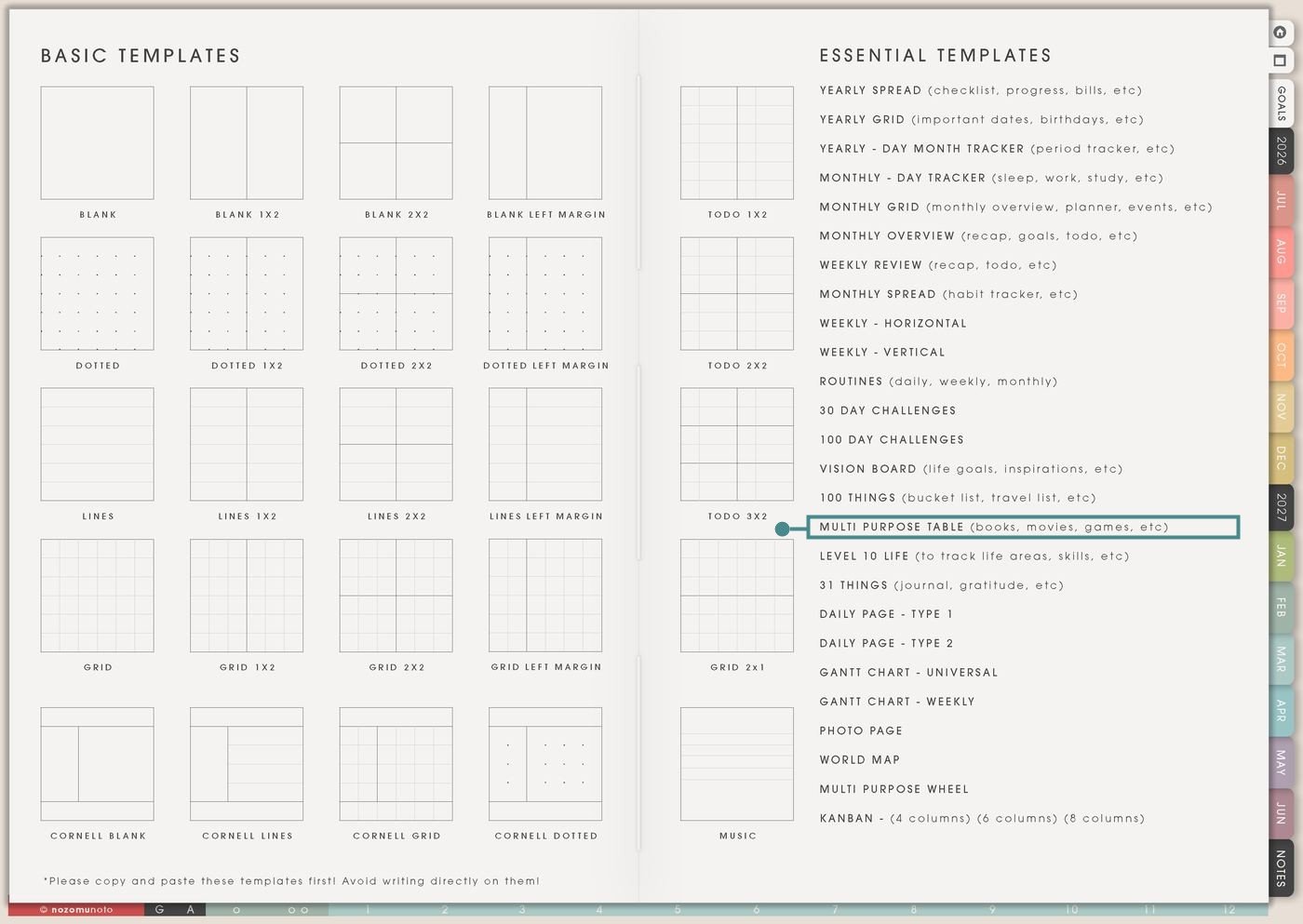
- Open the main Index page: use the planner Index if you need to return to the map.
- Tap the Template Pages icon: this opens the Template Index with reusable clean pages.
- Tap Multi Purpose Table: it is under 100 Things in the Essential Templates list.
- Copy the page before writing: this is a clean template master. Duplicate it first, then write on the copy.
Before you write: choose the columns first
Multi Purpose Table is an Essential Template Page. Keep the original clean and make a copy for the table you want to build.
- Open Multi Purpose Table from Template Index.
- Duplicate or copy the page in your app. Use the page overview, thumbnail view, page manager, or page actions menu.
- Name the copy by topic. Examples: Book Tracker, Gift Comparison, Sticker Inventory, Subscription Review, Study Topics, Product Ideas, or Home Supplies.
- Write column headers before filling rows. Start with four to six columns. Add more only if the table still feels clear.
- Keep row text short. The table is for scanning. Longer thoughts can go on a Notes page, project page, or the related planner section.
Ways to use this page
1. Books, movies, shows, games, or media tracker
Use the table when each title needs more than a check mark. This is helpful for tracking what you want to read, watch, play, borrow, buy, review, recommend, or finish.
2. Shopping comparison before choosing
Use Multi Purpose Table when several options look similar and you need to make a steady choice. It is very useful for gifts, tablets, styluses, apps, desk items, school supplies, digital tools, or household purchases.
3. Product, shop, or listing tracker
Use the table for small business or shop work when each product has repeated details. This keeps listing updates from becoming a messy notes pile.
4. Inventory for supplies, stickers, files, or materials
Use the table when you need to know what exists, where it is, and whether it needs refill, cleanup, backup, or deletion.
5. Subscription and renewal review
Use the table for recurring costs that quietly multiply. Seeing them in columns makes it easier to decide what to keep, cancel, pause, downgrade, or review later.
6. Study topic or class progress table
Use the table for subjects, chapters, skills, readings, videos, practice sets, exam topics, or assignments that need a simple progress view.
7. Project resources and follow-up list
Use Multi Purpose Table when a project has many resources, contacts, links, documents, references, or follow-up pieces. It keeps help material separate from the actual task list.
8. Meal, recipe, or family default table
Use the table for repeated decisions at home. This works especially well when a family has different preferences, effort levels, ingredients, or routines.
9. Gift, wish list, or holiday planning table
Use the table when gift ideas need details like person, budget, occasion, shop, delivery, bought status, wrapping status, and thank-you note.
10. Simple log with categories and notes
Use the page as a log when each entry needs more structure than a journal line but less structure than a full tracker. This can be for symptoms, moods, expenses, workouts, practice sessions, customer questions, creative ideas, or maintenance notes.
What I usually use it for and how I use it
Tips for using this page
- Start with the decision columns only. Good first columns are item, status, price, place, next action, and note. If a column does not change your decision, remove it.
- Use Multi Purpose Table only when columns matter. If you only need a long collection, use 100 Things. If you need dates, use Monthly Grid or Weekly. If you need stages, use Kanban.
- Write a tiny key at the top. For example: idea, compare, chosen, bought, done, moved, waiting. Keep the status words boring and clear.
- Keep the table note short, then move longer thoughts to a Notes page, Book Notes, project page, or journal page. The table can point to details without holding all of them.
- Write decision-level information only: service name, cost, renewal month, keep/cancel, and where the official details are stored. Keep private data in the secure place meant for it.
- Add a review cue. During Weekly Review or Monthly Overview, choose one row to move forward, one row to archive, and one row to leave for later. A table becomes useful when it helps the next decision.
- Undo if possible. If not, bring in a fresh clean copy from the original planner file. After that, make "copy first" the first step every time you use an Essential Template Page.
Final thought
I hope this helps you choose one small next step! Multi Purpose Table is useful when rows need columns. Copy the clean page, choose one topic, name the columns before filling the rows, and let the table help you compare, decide, restock, review, or move one item forward. It should make scattered details easier to see, not heavier to carry!
Need exact app steps for copying table pages?
If you need the exact buttons for duplicating this template, moving the copied page, importing Yume Techo, or using hyperlinks, use the Help Center app guide for your device.