
Browse help topics
Getting Started
Need help choosing?
Need help after purchase?
Download & Import
Using your notebook/planner
- How to change or reuse template pages on planner landing pages
- Why stickers look blurry when enlarged
- What to check if a product does not work on your device
- How to use NozomuNoto index pages
- How to use NozomuNoto template pages
- How to change a digital planner cover
- How to install and use digital stickers
Product Tutorials
- How to use Yume Techo Landscape tutorial pages
- How to use Yume Techo Portrait tutorial pages
- How to use Shibui Techo Weeks tutorial pages
- How to use Shibui Techo Months tutorial pages
- How to use Yume Noto V1 Landscape tutorial pages
- How to use Yume Noto V1 Portrait tutorial pages
- How to use Yume Noto V2 Landscape tutorial pages
- How to use Yume Noto V2 Portrait tutorial pages
- How to use Yume Noto V3 Portrait tutorial pages
- How to use NozomuNoto Ultimate Digital Stickers
- How to use NozomuNoto Digital Covers
- Which NozomuNoto instruction or tutorial file should I open first?
Device & App
iOS / iPadOS
GoodNotes
Notability
Noteshelf
Noteful
StarNote
Flexcil
Kilonotes
Android
StarNote
Samsung Notes
Penly
Flexcil
Noteshelf
Xodo
E-reader Devices
Boox devices
reMarkable
Bigme
Supernote
How to use Yume Noto V2 Landscape tutorial pages
Learn how to start using Yume Noto V2 Landscape tutorial pages, confirm your version, test links, use the Index, and begin with one section.
On this page
- Confirm your version first
- Built-in tutorial pages and visual guide
- Tips & Tricks Page
- Guide Page
- Index Page
- Template Page
- What Yume Noto V2 Landscape is best for
- Version and setup links
- How to use this notebook first
- Good ways to use this notebook
- Helpful expectations before you fill it
- Simple starter setup
- When the Yume Noto V2 Landscape setup gets tricky
- 1. The section system feels too big
- 2. You are not sure whether something is a section or a note
- 3. Wide pages invite too much detail
- 4. Template copies get separated from the topic
- Where to go next
This tutorial is for Yume Noto V2 Landscape. Before following the steps, make sure your product name, version, and orientation match this tutorial.
Confirm your version first
- Save the original download as your clean backup.
- Import one working copy into your app.
- Open the Index or tutorial page.
- Tap one link to test navigation.
- Choose one section or page to use today.
- Write one real note, list, idea, or project detail.
- Learn templates or extra features after the basics work.
Built-in tutorial pages and visual guide
Use the images below as visual checkpoints. The extra notes explain what to do with the page after you understand what it shows.
Tips & Tricks Page
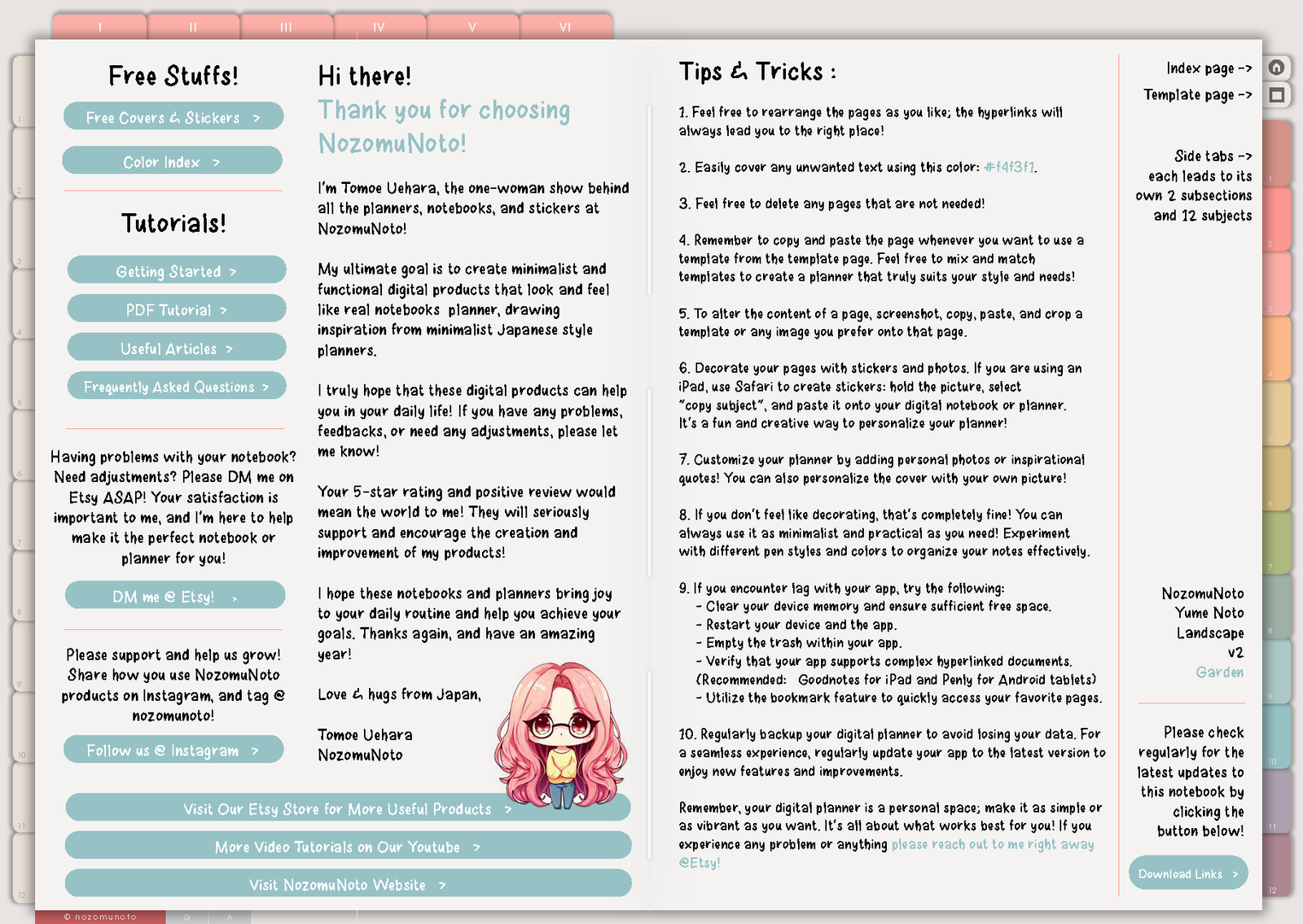
Use Tips & Tricks as the quick reference page. It is helpful when you forget how section tabs, copied pages, template pages, updates, or help links work.
Guide Page
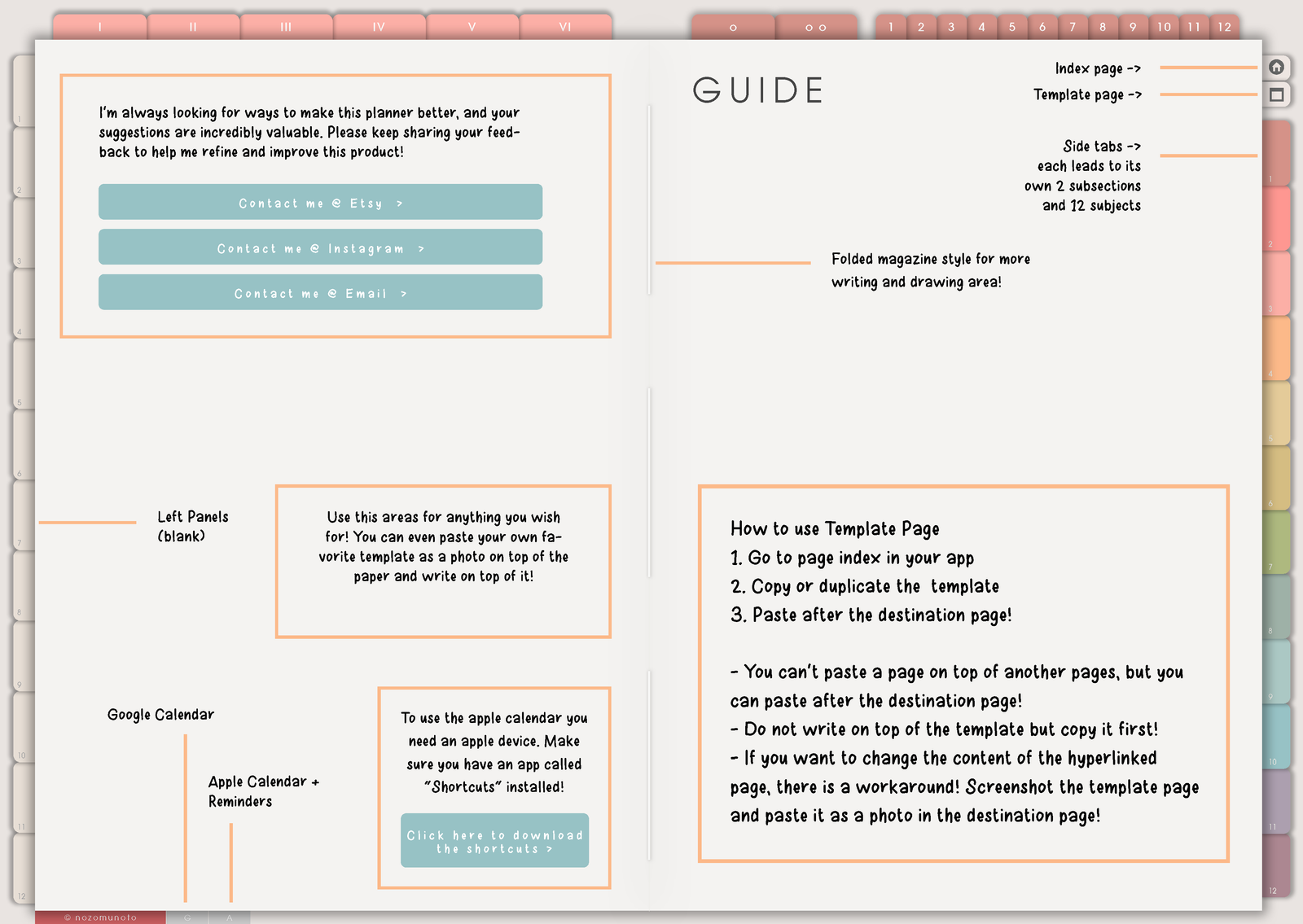
The guide page explains the notebook structure. Use it once at the beginning, then decide which sections match the way you actually take notes.
Index Page
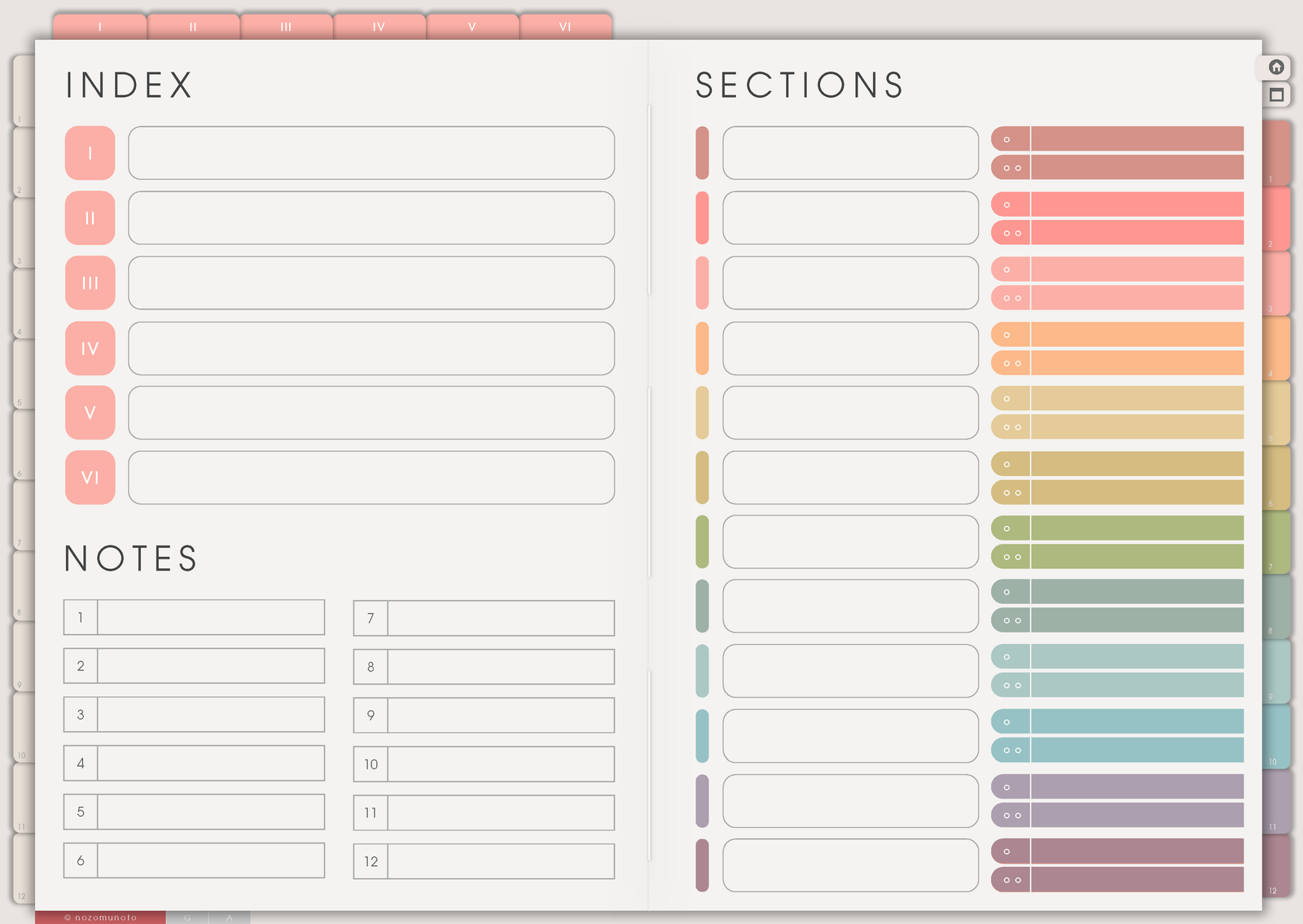
Use Index to keep notes findable. This matters more as the notebook grows, because page thumbnails alone can become hard to scan.
Template Page
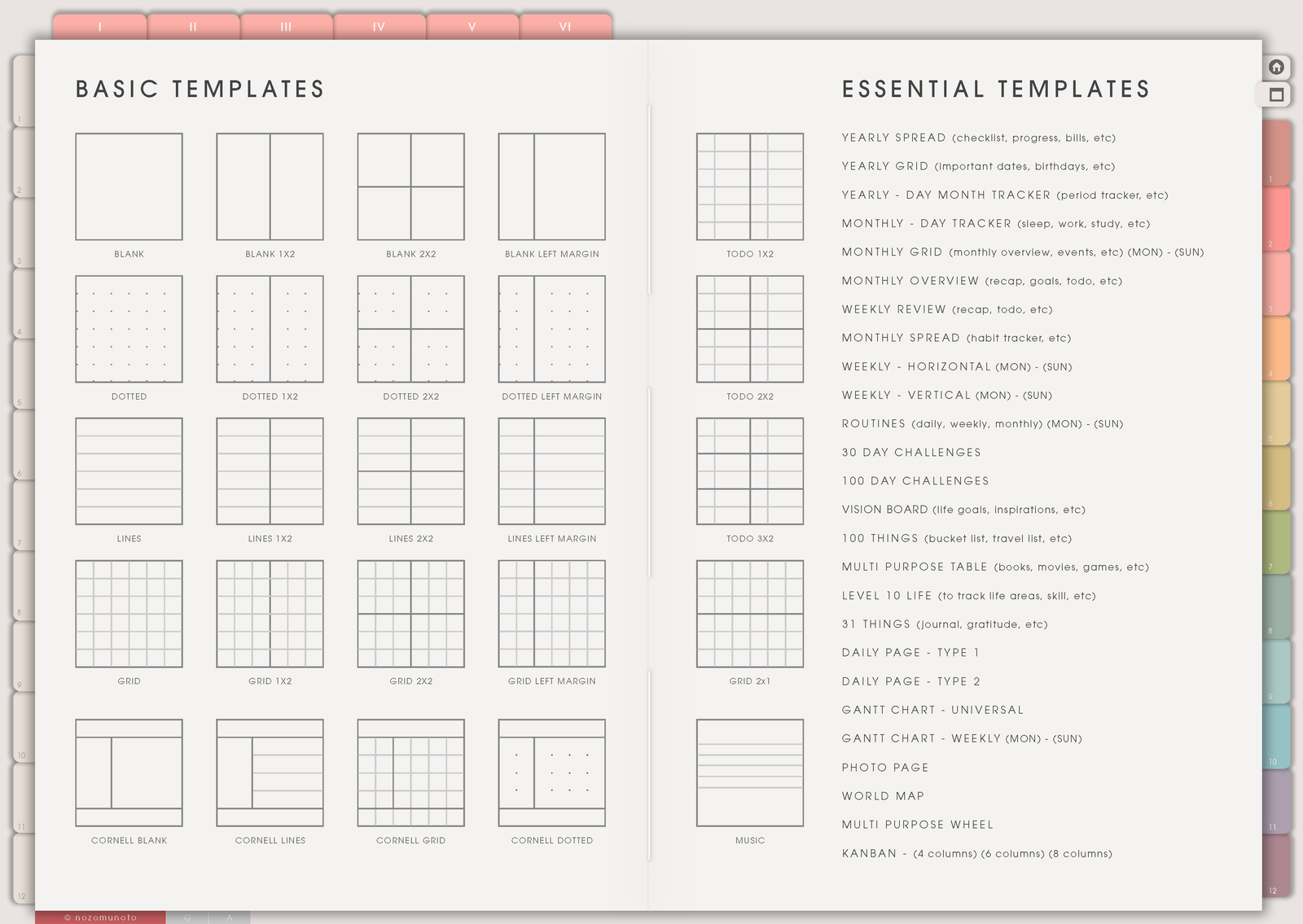
Choose the template that fits the note: grid for planning, lined for writing, blank for sketching, and structured pages for repeated projects or lists.
What Yume Noto V2 Landscape is best for
Yume Noto V2 Landscape is best when you want a more structured notebook than V1. Use the main sections for big areas like school, work, home, business, creative projects, reading, personal notes, or archives. Then use subsections and note pages for the smaller topics inside those areas.
The landscape layout is helpful for wide notes, side-by-side references, project dashboards, tables, meeting notes, study summaries, and planning pages that need horizontal space. It is still a notebook, not a dated planner, so keep appointments and deadlines in a planner or calendar and use Yume Noto for the notes behind them.
Version and setup links
- Difference between Yume Noto v1, v2, and v3
- What is a digital notebook?
- How to use NozomuNoto index pages
- How to use NozomuNoto template pages
- Which apps work with NozomuNoto planners?
- How to download and access your NozomuNoto files
How to use this notebook first
- Name only the sections you need now. Start with three to five sections so the notebook stays easy to use.
- Use Index as the map. Add short section names and return to Index when you need to find notes again.
- Use one Inbox section. Put messy notes there first when the note place is unclear.
- Use templates by job. Choose lined pages for writing, grid pages for planning, blank pages for sketches, and structured templates for repeated lists or projects.
- Archive old notes instead of deleting too soon. Move finished notes to an archive section when you might need them later.
Good ways to use this notebook
- School: subject notes, assignment notes, lecture summaries, reading notes, formulas, and revision pages.
- Work: meeting notes, client notes, project notes, process notes, content ideas, and follow-up lists.
- Home: recipes, routines, budget notes, cleaning lists, family information, and household projects.
- Creative: craft plans, product ideas, moodboards, sketches, quotes, and research pages.
- Personal: journal pages, memory notes, therapy notes, health notes, book notes, and prayer or Bible study notes.
Landscape is helpful for wide notes, split-screen reference, dashboards, tables, and desk planning.
Helpful expectations before you fill it
- Give the notebook one main job first. Decide whether it is mainly for school, work, home, projects, journaling, or mixed notes.
- Leave unused sections blank. Empty sections are normal. Use the notebook slowly and let the structure grow from real notes.
- Use Inbox before sorting. Catch messy notes first, then move the ones worth keeping after you can see what they are becoming.
- Keep dates in a planner or calendar. Use the notebook for the information behind those dates: notes, research, ideas, lists, and references.
Simple starter setup
For the first notebook setup, create sections such as Inbox, Work, Study, Home, Ideas, and Archive. Put messy notes in Inbox first, then move only the notes worth keeping into the right section later. This keeps the notebook useful without forcing you to organize everything immediately.
When the Yume Noto V2 Landscape setup gets tricky
1. The section system feels too big
What happens: the notebook has main sections, subsections, note areas, and templates, so it can feel like everything needs a name immediately.
What to do: name only the main sections you need first. Leave unused sections blank until a repeated topic appears.
2. You are not sure whether something is a section or a note
What happens: a topic feels important, but it may not need a whole section yet.
What to do: start it as a note in Inbox or an existing section. Turn it into a section only when it keeps growing.
3. Wide pages invite too much detail
What happens: a landscape spread becomes a storage place for everything, and the page becomes hard to scan.
What to do: give each page one job: meeting notes, project dashboard, study summary, table, brainstorm, or reference page.
4. Template copies get separated from the topic
What happens: copied templates are useful but end up far from the section they belong to.
What to do: copy the template, move it near the right section if your app allows page moving, then bookmark it or list it in Index.
Where to go next
Yume Noto V2 Landscape explains the product pages. For page ideas, use Tips & Ideas. For app buttons, imports, page copying, bookmarks, covers, stickers, or device problems, use the Help Center guide for your app.
Still need help?
Send your order number, product name, device, app, and a screenshot or short screen recording if the issue is visual.